
How to Figure Interest on a CD
Step-by-step formulas, real-world examples, and expert strategies to calculate and maximize your certificate of deposit earnings.
Available
Insured
Frequency
If you’ve ever opened a certificate of deposit and wondered, “How much will I actually earn from this?” — you’re not alone. CDs are one of the most popular savings tools in the United States, but many people deposit their money and never verify whether the payout matches their expectations.
This guide walks you through everything: simple vs. compound interest, step-by-step calculation methods, real-world examples, and the factors that boost — or quietly chip away at — your final earnings.

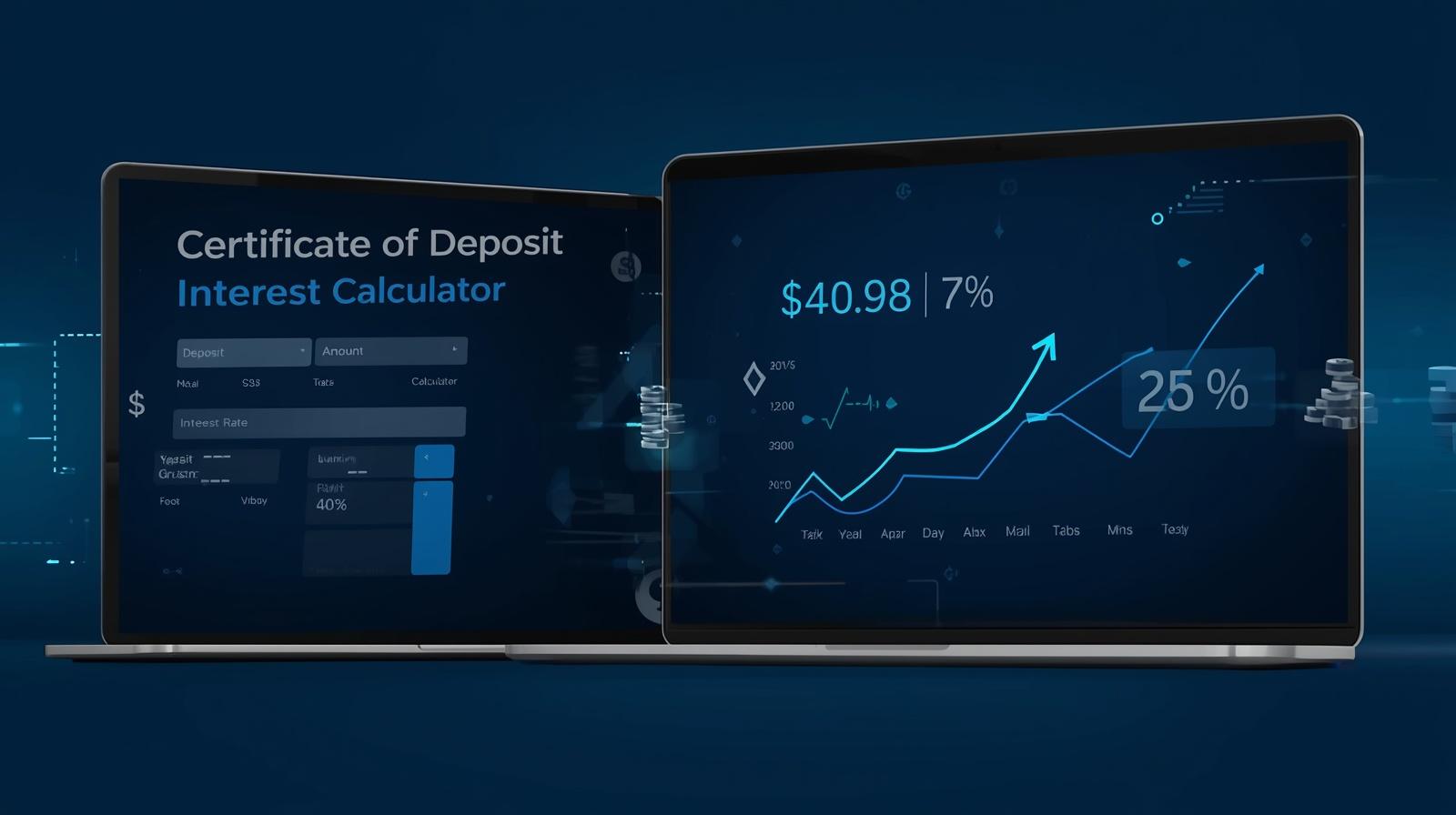
Visual overview of the CD interest calculation process — from deposit to final balance growth
What Is a CD and How Does It Earn?
A certificate of deposit (CD) is a time-deposit savings account offered by banks and credit unions. You agree to leave a fixed amount deposited for a set period — the term — in exchange for a guaranteed interest rate that’s typically higher than a regular savings account.
Interest accrues in one of two ways: simple interest (on your original principal only) or compound interest (on principal plus previously earned interest). Most U.S. CDs use compound interest, which grows your money progressively faster over time.
Simple vs. Compound Interest
Simple Interest Formula
Total at maturity: $5,250.00
Compound Interest Formula
n = compounds per year · t = time in years
Step-by-Step Calculation Method
Real-World Calculation Examples
Daily Compounding
A ≈ $10,000 × 1.026180
Monthly Compounding
A ≈ $26,237.50
Daily Compounding
A ≈ $60,986.77

A CD interest calculator app tracking real-time savings growth and projected earnings by maturity date
APY vs APR — Why It Matters
APR is the base rate before compounding. APY is what you actually earn after compounding is applied — always equal to or higher than APR. More frequent compounding = higher APY at the same stated APR.
Based on $10,000 at 5.00% APR for 1 year
How CD Interest Is Paid
Factors That Affect Your Earnings
| Factor | Impact | Expert Tip |
|---|---|---|
| APY Rate | Direct multiplier on all earnings | Online banks often pay 0.5–1.5% more |
| Term Length | Longer = higher rate (usually) | Compare short vs. long in current rate climate |
| Principal Amount | Double principal = double interest | Jumbo CDs ($100K+) may earn premium rates |
| Compounding Frequency | Daily > Monthly > Quarterly > Annual | Prefer daily compounding at equal rates |
| Early Withdrawal Penalty | Can wipe out months of interest | Only lock up funds you won’t need early |
Early Withdrawal Penalties
| CD Term | Typical Penalty | Cost on $50,000 at 4% |
|---|---|---|
| Under 1 year | 90 days of interest | ~$493 lost |
| 1–2 years | 150–180 days of interest | ~$822–$986 lost |
| 2–3 years | 180–270 days of interest | ~$986–$1,479 lost |
| 5 years | 365 days of interest | ~$2,000 lost |
CD Laddering — The Smart Strategy
Instead of locking $20,000 into a single 5-year CD, a ladder divides your investment across 1- through 5-year CDs. One matures every year — giving you access to funds while the rest keeps compounding at longer-term rates.

Certificate of deposit interest calculator interface with deposit fields, rate inputs, and a savings growth curve over time
Taxes on CD Interest
CD interest is fully taxable as ordinary income by the IRS — even if you don’t withdraw it. Banks issue Form 1099-INT for $10 or more earned in a year. For multi-year CDs, taxes are owed annually, not just at maturity.
| Consideration | Details |
|---|---|
| Federal Tax Rate | Ordinary income rate (not lower capital gains rate) |
| State Taxes | Most states also tax CD interest as ordinary income |
| Annual Obligation | Due each tax year — not just at maturity for multi-year CDs |
| IRA Strategy | Hold CDs in a Traditional or Roth IRA to defer/eliminate taxes |
| Reporting | Form 1099-INT issued by bank if you earn $10 or more |
Expert Tips to Earn More
Ready to See Your CD Earnings?
Enter your deposit amount, term, and rate — get your exact interest in seconds.
Frequently Asked Questions
Conclusion
Figuring out interest on a CD comes down to a few key variables: your principal, the interest rate, how often it compounds, and how long you leave it in place. Once you know the compound interest formula — A = P(1 + r/n)^(nt) — and understand how APY reflects your true annual earnings, calculating CD interest becomes second nature.
Small differences in rate, compounding frequency, and term length add up to real money over time. A 0.50% difference in APY on a $50,000 deposit over five years is worth more than $1,400. Knowing how to figure that out — before you commit — puts that money firmly in your pocket.